In the light of recent increasing numbers of bluetongue infections in the West Country and Wales, we would like to pass on the latest advice on what to look out for, what to do, and how to try and protect your animals.
BLUETONGUE IS A NOTIFIABLE DISEASE. IF YOU SUSPECT A CASE, PLEASE IMMEDIATELY REPORT IT TO THE APHA ON 03000 200 301.
If you just require advice, then please ring the surgery on 01825 764268.
What animals are affected?
Cattle, sheep, goats and camelids. Sheep are generally affected worse than cattle, but mortality and morbidity varies between flocks, herds, breeds and areas.
Severity
- This can be variable. Some animals will be very sick very quickly and others will have mild signs and recover quickly with symptomatic treatment.
- Sheep are affected worse than cattle.
- Animals with concurrent issues, such as high worm burdens or old age, will not surprisingly have more severe signs and higher mortality rates.
- Anecdotally, rams seem to suffer more than ewes and certain breeds seem to be more severely affected.
- Some animals will not survive and will either die or need to be euthanased on humane grounds.
- Vaccinated animals can still be infected but will have greatly reduced clinical signs.
Clinical signs of disease
- Nearly all affected animals have a high temperature.
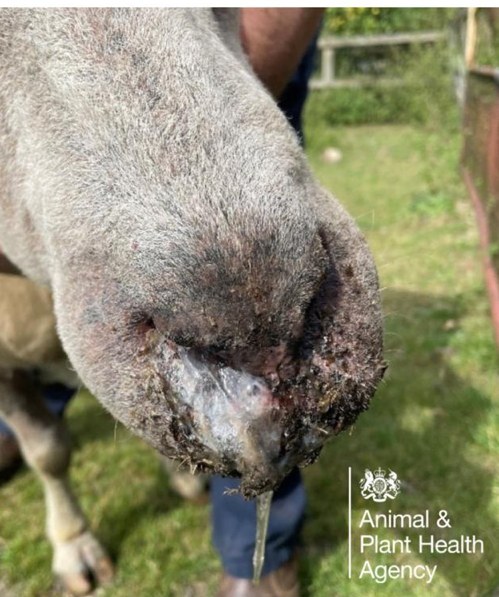
- Most have some sort of oral lesions – ulcers, erosions and necrotic lesions. This affects their appetite and ability to eat, and sometimes to swallow.
- Most have nasal discharge – either clear or snotty – and some may drool.
- Many have crusty, sore or inflamed noses and lips. In some flocks their whole head and tongue may be swollen.
- Crusting and redness of teats in cattle.
- Redness and soreness around the coronary band in sheep and cattle, causing lameness.
- Many animals will look hollow, “sick” and “sad”. They may get exhausted quickly if you are trying to catch them up.
If you suspect a case
Contact the APHA on 03000 200 301 and be ready to answer some questions:
- How many animals do you have?
- How many animals are affected?
- How many have died?
- When did you first notice the clinical signs?
- Are the animals vaccinated?
- What species do you own?
- What is your CPH number?
Vaccination
Vaccination remains the main method of protecting your animals. Please ask the surgery for advice on 01825 764268.
Further information
For the latest information, please follow the links below:
- Ruminant Health & Welfare – see their bluetongue virus hub
- GOV.UK – Bluetongue: latest situation